Recapturing Revenue with Integrated Branded Resale
A resale marketplace built into the retailer's primary store, designed to recapture revenue from third-party platforms and convert new customers to the brand.


Bringing resale back into the brand ecosystem
Outdoor gear brands have a strong resale opportunity, but most secondhand sales happen on third-party platforms. For retailers who do start branded resale programs, the platforms often feel disconnected from their primary store. This product puts recommerce inside the retailer’s own app, creating a secondhand shopping experience that feels native to the brand rather than bolted on.
My role
Product Design
Strategy
UX Research
Visual Design
Interaction Design
Year
2026
Team
Radu Vucea,
Lead Designer
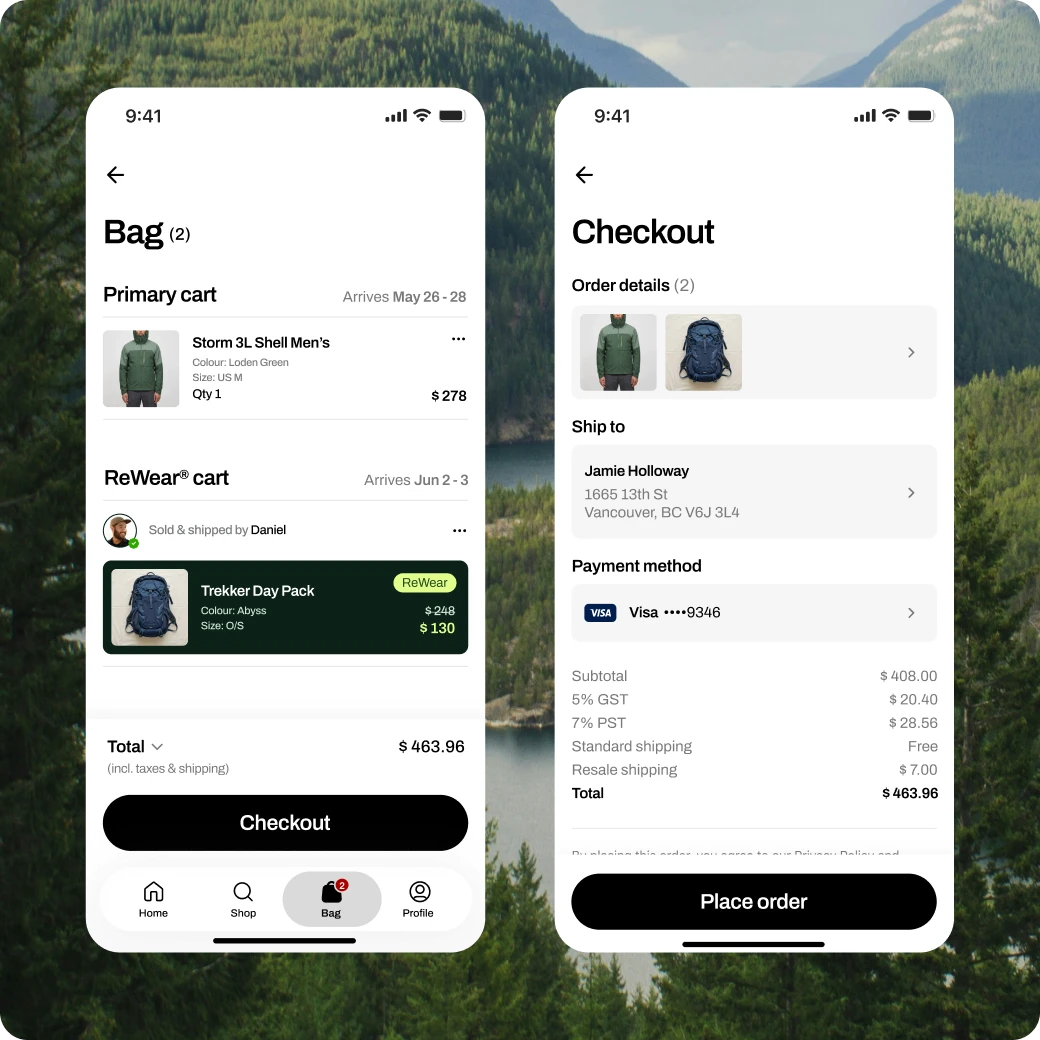


Why this problem?
Branded resale targets acquisition and retention at once
The global secondhand apparel market is projected to reach $393 billion by 2030, and leading brands are increasingly treating resale as a revenue channel. Industry data shows roughly 50-70% of branded resale buyers are new to the brand, which means that resale also serves as a customer acquisition channel.
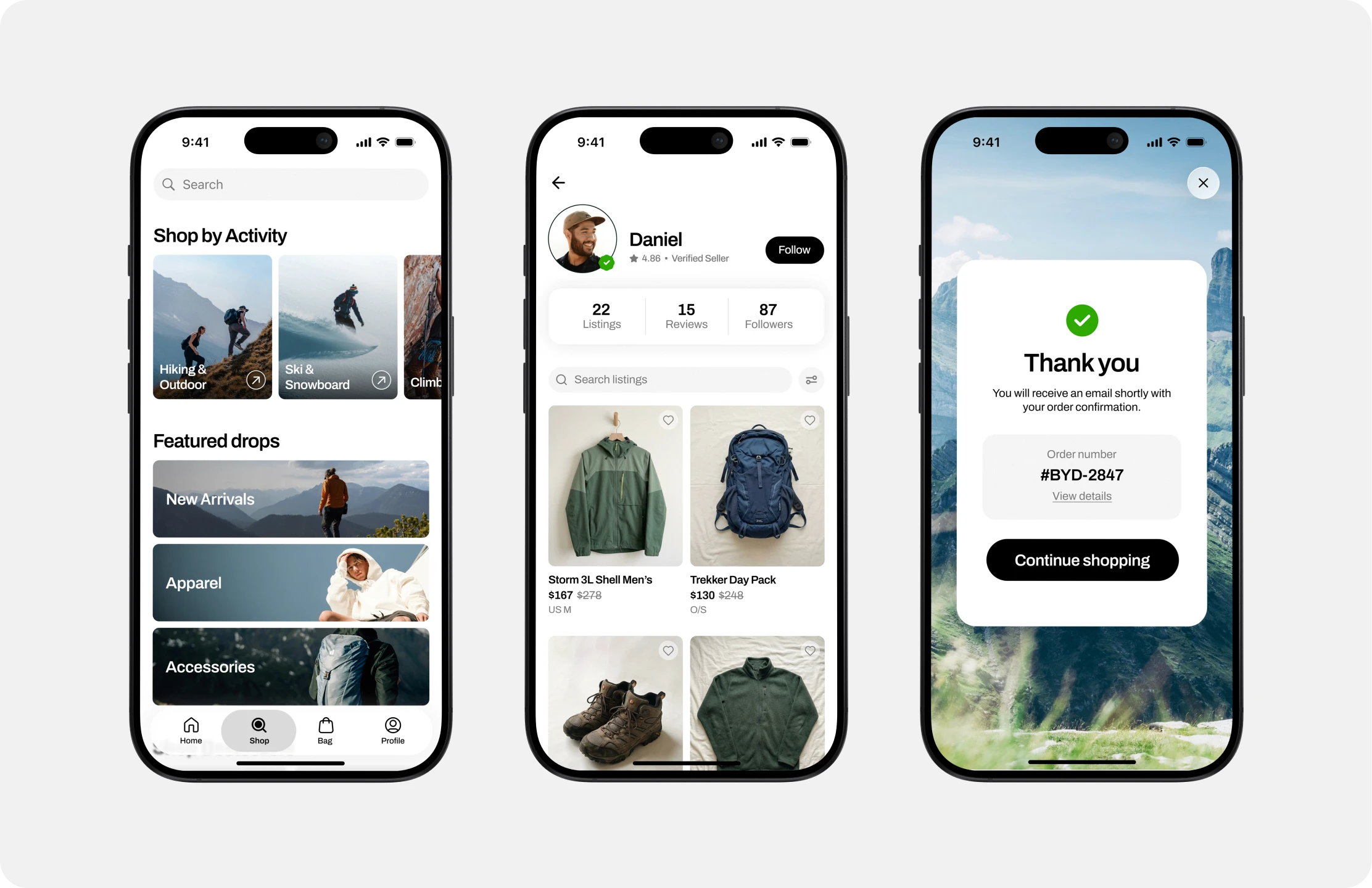
A toggle on the primary PDP enables discovery and creates an entry point into the resale experience.
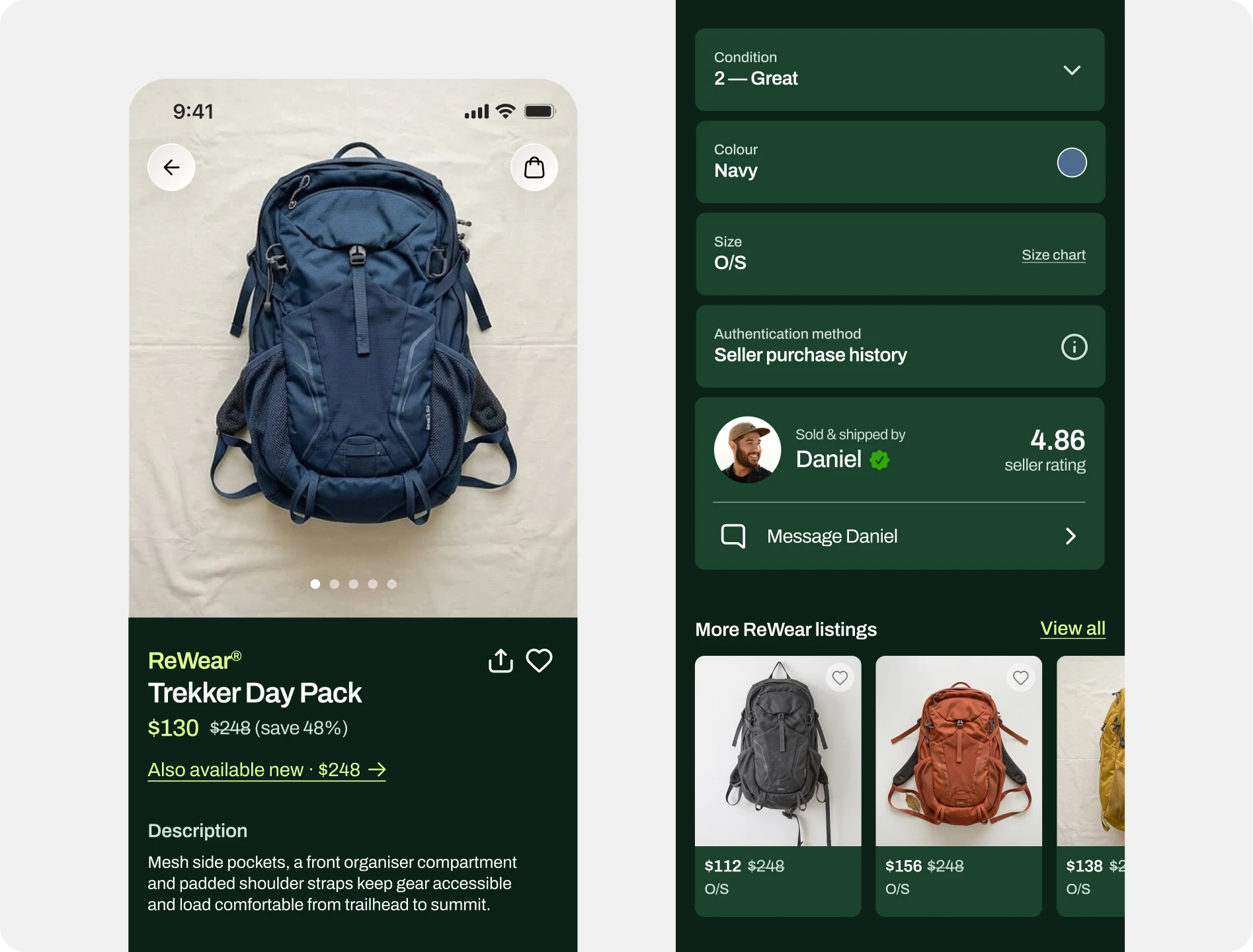
To ensure shoppers don't confuse new items with secondhand items, I created a separate brand identity just for resale.
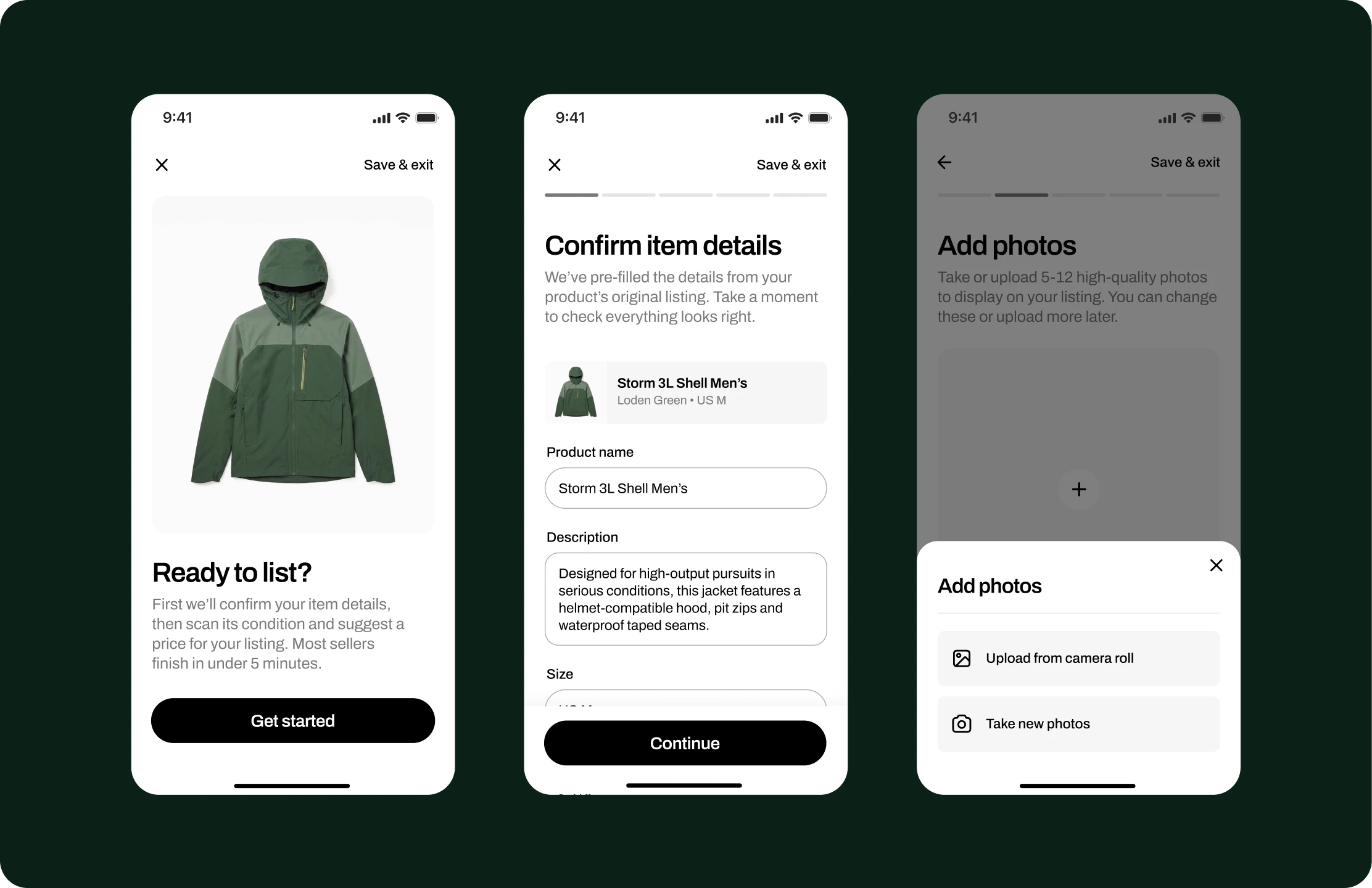
The listing flow is designed to make selling, price selection and flaw detection as seamless as possible.
Before & after
'Set your price' screen
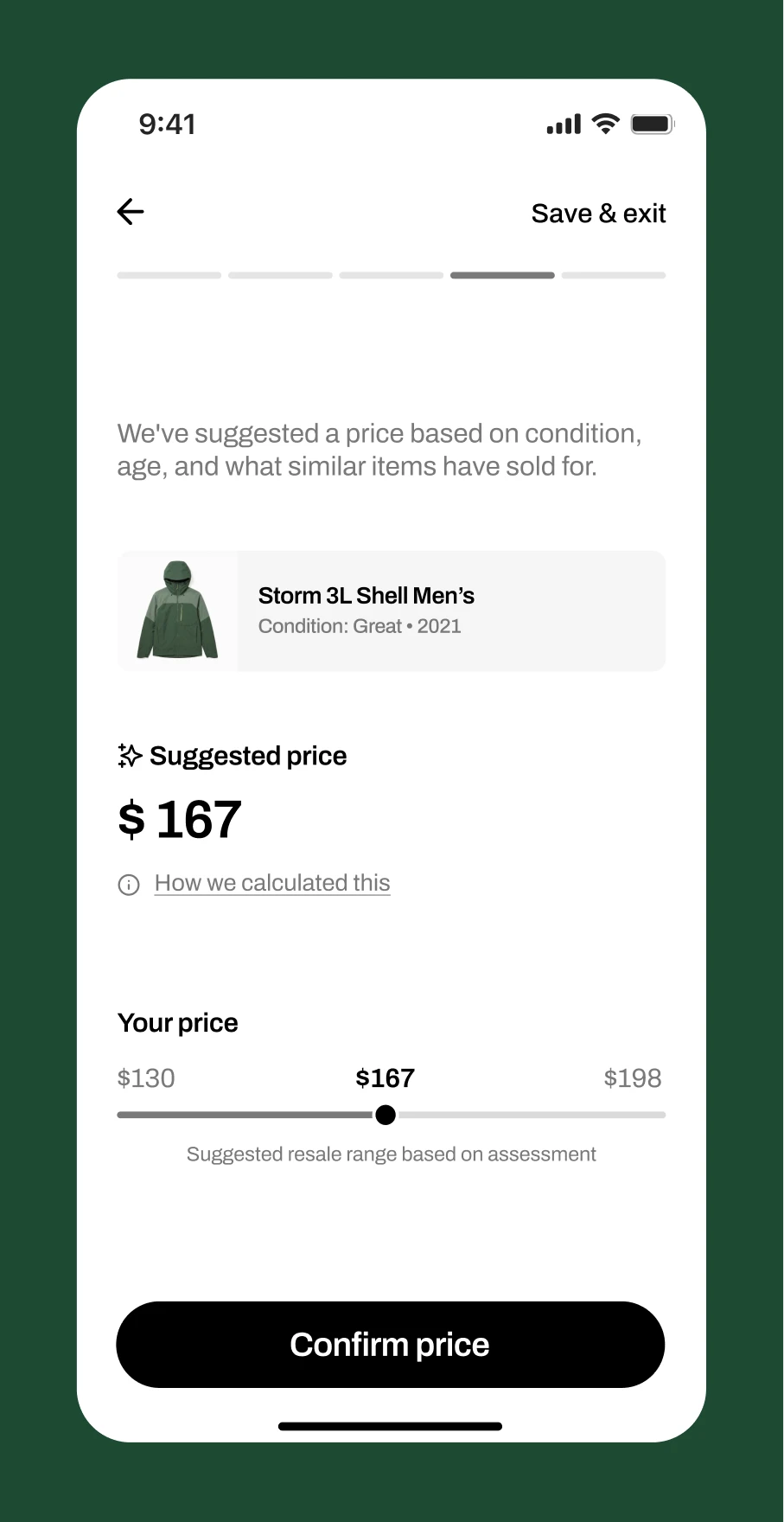
Other revisions included removing the product card to free up real estate and removing AI icons that weren't likely to resonate with the target audience.
Outcomes
A seamless buying & listing experience
Discoverability - Testers of the buying flow were quick to locate and shop resale within the primary store, navigate between new and used items, and could easily articulate the differences between the two experiences.
Supply - Testers responded positively to the AI-assisted tools in the listing flow (such as blemish detection, condition grading, and pricing suggestions), describing them as a welcome relief from the high cognitive effort that selling typically requires.
While each finding would benefit from testing at scale, they support the thesis that a native resale experience can recapture secondhand revenue for brands, and bring in new shoppers who typically go on to purchase full-price.
